If you’ve ever wondered what drives the cost of woven wood shades, you’re not alone. These natural, hand-crafted window treatments can vary widely in price, and homeowners in Annapolis often notice that two shades that look similar can have dramatically different costs.
In this blog, you’ll get a clear breakdown of the key factors behind that price range — from materials and weave density to custom sizing, liners, and motorized lift systems — so you know exactly what you’re paying for. This overview is designed to give you a quick summary right away, helping you understand how design choices and construction methods influence the total investment. You’ll also get practical insights to guide your selection, whether you’re aiming for simplicity or a fully customized woven-wood solution.
Keep reading to learn what truly shapes the price tag and how to choose shades that are worth every penny for your space.
What Are Woven Wood Shades?
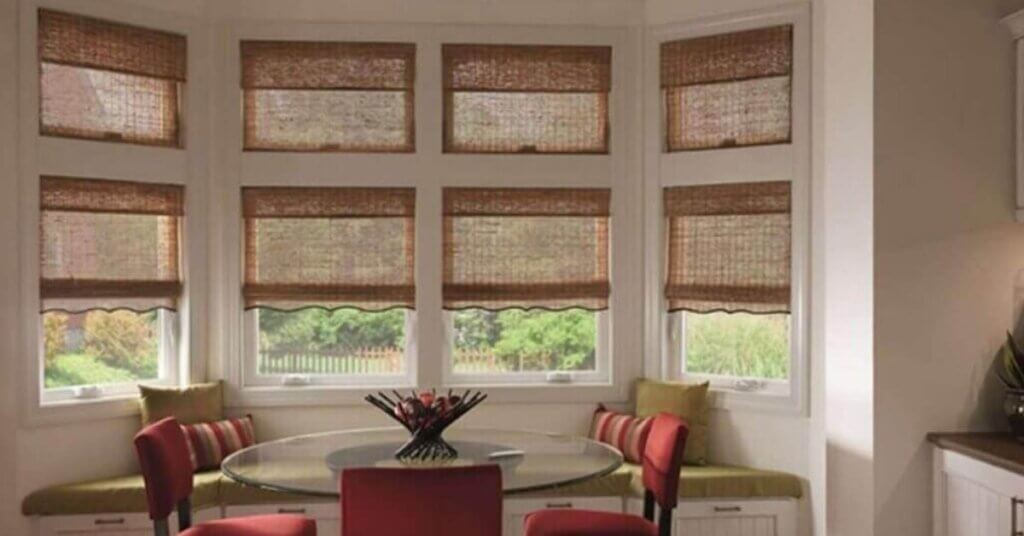
Woven wood shades are window coverings crafted from natural materials such as bamboo, reeds, grasses, and sometimes jute. They offer a warm, earthy look that brings texture and organic charm to a room — much different from synthetic blinds or fabric shades. These shades filter light gently rather than blocking it completely (unless paired with liners), allowing a soft glow while maintaining some privacy.
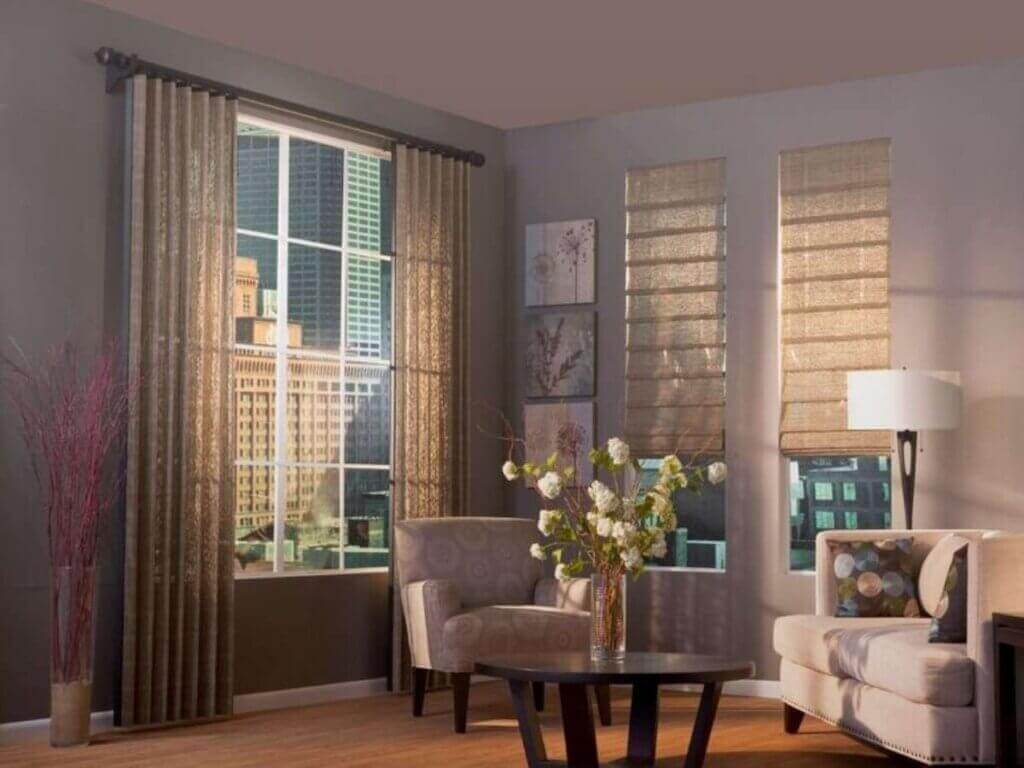
Style-wise, woven wood shades can come in forms similar to classic Roman shades, roller shades, or even cascading/waterfall-like styles, depending on how the weave is constructed and how the shade is built.
Why the Price Differs: Key Cost Drivers
Material Quality & Type
- Natural materials vs. blends: Shades made purely from bamboo, reeds, grasses, or jute — all natural materials — tend to be more expensive than blends or those mixing in synthetic fibers.
- Bamboo, reeds, grasses, jute: Each material has its own look, texture, and “feel.” Bamboo often offers a cleaner, more uniform appearance, whereas grasses or reeds give a rustic, uneven texture.
- Hand-woven vs. machine-made: Hand-woven shades — with careful craftsmanship and attention to detail — will cost more than mass-produced machine weaves. The artisanal craftsmanship adds to both aesthetic value and cost.
Weave Density and Style
- Tight weave vs. loose weave: Tighter weave patterns provide more privacy and better light filtering (or blocking when combined with a liner). They use more material and require more care, making them cost more than loosely woven styles. Loose weaves let in more light and air and tend to be more budget-friendly.
- Flatweave, matchstick, grass, reed weaves: Different weave types and thicknesses influence material cost and labor. For example, thin matchstick or flatweave shades can be lighter and less expensive, whereas heavier reed or grass weaves require more material — driving up cost.
Liners, Light Control & UV Protection
- Unlined shades (light-filtering): These are usually the most affordable. They soften sunlight and create a cozy glow but give limited privacy and minimal UV protection.
- Privacy liner: A sewn-in liner gives enhanced privacy while still letting in some diffused light. It also helps protect natural fibers from UV exposure — which helps the shade last longer.
- Blackout liner: For full room darkening (ideal for bedrooms or media rooms), this liner option offers maximum light blocking and privacy — at a higher material and labor cost.
Shade Style & Customization
- Roman, Roller, Waterfall/Roman cascade styles: The style you choose affects complexity and cost. Shades designed with folds (like Roman or waterfall style) often require more material and labor compared to simple flat-roll designs.
- Specialty shapes and non-standard windows: Custom shapes (arched windows, tall ceilings, oversized windows) require custom weaving and cutting — increasing both material waste and labor.
- Edge banding, decorative trim, special finishes: For a tailored, finished look (especially important for high-end design or open-mount installations) — edge banding, trim, or molding add to cost.

Window Size & Installation Complexity
- Window size: Larger windows require more material and labor, so naturally cost more.
- Number of windows / full-home installation: If you’re outfitting multiple windows at once, labor and installation costs add up — especially if repeating custom cuts or trims.
- Installation difficulty or specialty mount: Inside-mount vs. outside-mount, mounting near molding or non-standard window frames — these complexities can add time and cost. (As is true for many custom window treatments.)
Lift Systems & Controls
- Basic pull-cord or continuous-loop lift: The most affordable option, but less sleek and often not recommended for modern homes or homes with children/pets.
- Cordless lift systems: Safer, sleeker, and more desirable — though more expensive due to extra hardware and labor.
- Motorized lift / automated systems: This is among the biggest cost drivers. Motorization adds both equipment cost and installation complexity — but delivers convenience and a premium finish.
- Top-down/bottom-up operation or dual controls: These versatile control options add to customization and cost, but offer better light and privacy control for rooms used throughout the day.
Durability, Maintenance & Longevity
- Natural fiber durability: Natural woven shades can fade or degrade over time if exposed to intense UV without a liner. Moisture can also pose a risk, so depending on room humidity, durability matters.
- Quality of craftsmanship: Well-constructed shades with tight weaving and good finishing will last longer and hold shape better — worth the higher initial cost for many homeowners.
- Long-term value: Higher quality — especially with liners and good installation — often translates into longer lifespan and fewer replacements, making the investment more justified.
Summary: What Defines the Cost
Cost Factor | Effect on Price |
Material quality (bamboo, reeds, grasses, jute) | Natural & premium materials → higher cost |
Weave density (tight vs loose) | Tight weave requires more labor/material → higher cost |
Shade style (flat, Roman, waterfall, roller) | More complex styles → more labor/material → higher cost |
Liners (privacy, blackout) | Adds material, labor → more expensive |
Custom window sizes / shapes | Custom work → higher cost |
Lift systems (cordless, motorized) | More features → higher cost |
Number of windows / installation complexity | More work → higher cost |
Durability / craftsmanship quality | Better quality → higher initial cost, better longevity |
What You Should Do: A Quick Checklist
- Measure your windows carefully (width, height, shape)
- Decide desired light-control: light-filtering, privacy, or blackout
- Choose material and weave type (bamboo, reed, grasses; tight or loose weave)
- Select shade style (flat roll, Roman, waterfall, etc.)
- Decide on liner (none, privacy, blackout)
- Pick lift control (basic, cordless, motorized)
- Consider installation complexity and potential extra labor
- Compare long-term value: immediate savings vs. durability and longevity
FAQs About Cost of Woven Wood Shades
Why do woven wood shades cost more than standard blinds or vinyl shades?
Woven wood shades use natural materials such as bamboo, reeds, grasses or jute rather than synthetic materials. Their construction often requires more labor, particularly if hand-woven or custom-sized. Add to that optional enhancements like liners, edge banding, and advanced lift systems — and the cost rises.
Do custom weaves or liners really make a big difference in cost?
Yes — custom weaves usually mean more material waste, more labor, and often manual craftsmanship. Adding a privacy or blackout liner adds material and stitching labor. Both upgrade the function (privacy, light control, UV protection) and the price.
Is motorized or cordless lift worth the cost for woven wood shades?
For many homeowners, yes. Motorized or cordless lift adds convenience, safety (no dangling cords), and a sleek, modern feel. While it increases upfront cost, it often enhances long-term value, especially in frequently used rooms or homes with children/pets.
Final Thoughts: What Drives the Price Tag
In short: the wide variation in the cost of woven wood shades comes down to choices — the materials you select, how they’re woven, how the shade is built, and how you operate it. Choosing natural bamboo, tight weave, custom size, blackout liner, and motorized lift? That adds up fast. But opting for looser weave bamboo, simple flat style, and manual lift? That’s much more budget-friendly.
If you pick thoughtfully — balancing aesthetics, function, and budget — woven wood shades can offer long-lasting value, natural beauty, and functional light control.
Ready for Next Steps? Schedule a Shade Consultation
If you’d like to explore woven wood shades tailored to your home in Annapolis or the surrounding area — from natural bamboo rolls to custom Roman-style shades with blackout liners — contact us to schedule an in-home consultation. We’ll help you pick the right materials, style, and lift system to match your space and your budget.